Steam Heat & Radiator Repair in Highbridge, Bronx
From ice-cold radiators and hissing air vents to loud water hammer, expert radiator repair Highbridge Bronx restores quiet, balanced warmth across every apartment and room.
- Steam radiator valve replacement Highbridge Bronx
- Eliminating banging steam pipes Highbridge Bronx
- Adjustable air vent venting & pitch correction
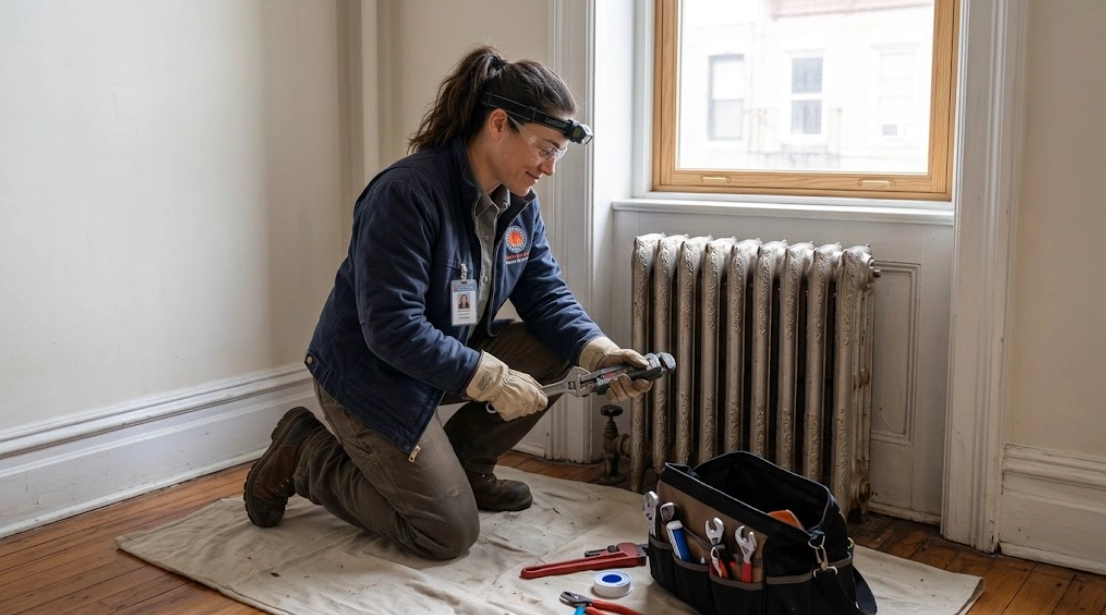
Steam Heat Distribution in Highbridge, Bronx Buildings
Throughout Highbridge, row houses and pre-war multi-family apartment buildings rely on classic single-pipe and two-pipe steam heating. When operating properly, steam heating provides robust, gentle warmth. However, steam is fundamentally an air-displacement system: when steam leaves the boiler, the distribution piping and radiators are completely filled with cold room air. Steam can only enter radiators if that cold air is rapidly exhausted through functional radiator air vents.
Over decades of service, mineral-rich steam condensate, corrosion, and calcified air valves create uneven heating. First-floor apartments overheat while top-floor bedrooms remain freezing. Leaking valve stems damage wood flooring, and loud clanking disrupts sleep. Our specialized steam technicians diagnose and resolve these distribution failures to balance heat across your entire property.
Common Radiator Failures & Root Causes
Radiator problems manifest in several distinct mechanical symptoms:
- Cold Radiators Despite Boiler Firing: When a radiator air vent corrodes shut, air remains trapped inside. Steam pressure cannot compress the trapped air pocket, leaving the cast iron cold. In other cases, the shutoff valve disc has detached inside the brass valve body.
- Banging Steam Pipes & Violent Water Hammer: Severe knocking occurs when steam moving at 30 to 60 miles per hour collides with pooled condensate water in a sagged pipe or back-pitched radiator. Pitching the radiator toward the supply valve with solid shims allows condensate to drain by gravity.
- Hissing and Spitting Air Vents: When an air vent float valve fails or becomes plugged with boiler sludge, it sprays scalding water and rust droplets onto walls and finished floors.
- Leaking Packing Nuts and Valve Stems: Dried graphite or Teflon packing around radiator shutoff valve stems allows pressurized steam and water to seep out whenever the system heats up.
Step-by-Step Radiator Repair Procedure
Our technicians take a systematic approach to restoring quiet, efficient radiator operation:
System Steam Cycle Inspection
We observe a complete firing cycle, measuring operating boiler pressure and checking header mains.
Radiator Pitch & Alignment
We check gravity pitch using precision levels, shimming radiator feet to ensure complete condensate drainage.
Valve & Vent Replacement
We replace frozen shutoff valves with heavy brass angle valves and install calibrated adjustable air vents.
Balancing & Thermal Testing
We test radiator temperature rise room by room, fine-tuning vent port sizes to synchronize heating.
Steam vs. Hot-Water Radiator Differences
It is vital to distinguish between steam radiators and hydronic hot-water baseboards. Steam radiators rely on temperature-sensitive air vents that click shut when hot steam arrives. Hot-water systems, by contrast, are closed pressurized water loops where manual or automatic coin bleeders must purge air pockets so that water can circulate. Knowing your system type ensures proper diagnosis. For issues originating at the heat source, return to our primary boiler repair in Highbridge resource.
Preventive Steam System Maintenance
Maintaining a steam system involves keeping operating pressure low (typically under 2 PSI on residential systems), flushing low-water cutoffs, and inspecting main line quick-vents in the basement ceiling. When main line vents fail, steam takes ten times longer to reach distant risers. If older pipes show chronic dampness inside walls, review our non-invasive leak detection services.
Frequently Asked Questions About Radiator Repair
Why is my steam radiator completely cold while others in the building are hot?
In single-pipe steam systems, cold radiators are almost always caused by a stuck or clogged air vent, a partially closed shutoff valve, or back-pitched radiator feet. If the air vent cannot exhaust room air, incoming steam is physically blocked from entering the cast-iron radiator body.
What causes loud knocking and banging steam pipes in Highbridge buildings?
Loud banging (water hammer) occurs when high-velocity steam collides with standing puddles of condensed water inside pipes. This happens when radiators pitch away from their supply valve, radiator shutoff valves are throttled halfway, or boiler operating steam pressure is set too high.
Can a steam radiator shutoff valve be used to adjust room temperature?
No. On single-pipe steam systems, radiator supply valves must be 100% fully open or 100% fully closed. Leaving a valve half-open restricts returning condensate water, forcing steam and water into the same tight opening and causing violent banging and spurting valve leaks.