Water Heater Repair in Highbridge, Bronx
When cold showers, pilot outages, or tank leaks disrupt your home, prompt water heater repair Highbridge Bronx restores safe, reliable hot water across your property.
- Fast diagnosis for no hot water repair Highbridge Bronx
- Gas water heater repair Highbridge Bronx & thermocouples
- Electric water heater repair Highbridge Bronx & elements
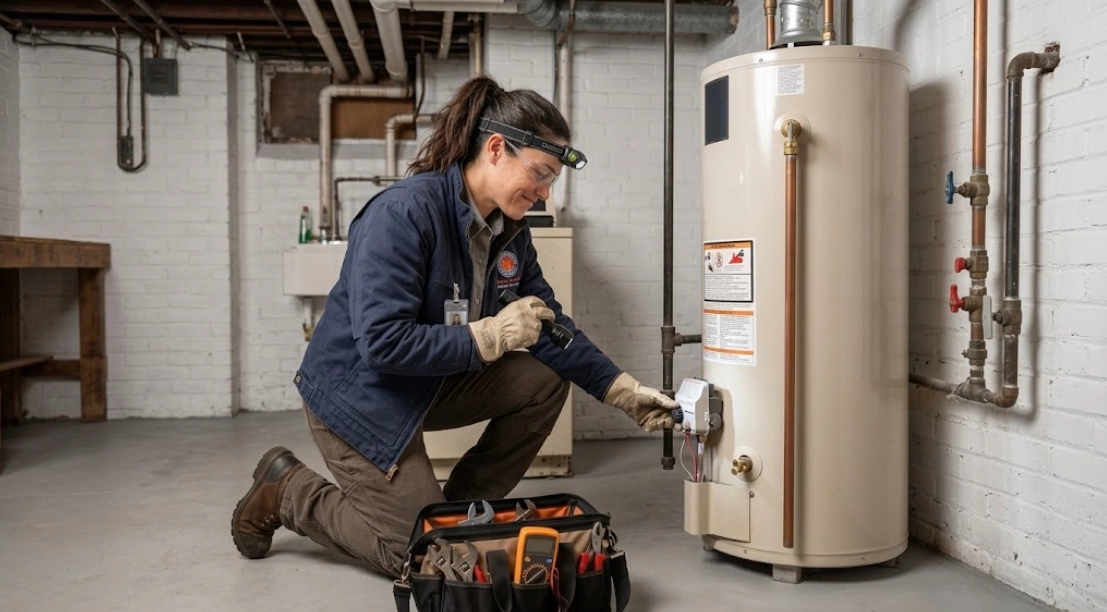
Domestic Water Heating Challenges in Highbridge Homes
Reliable hot water is a fundamental necessity for daily sanitizing, cooking, and bathing. In Highbridge, residential buildings feature diverse water heating setups, ranging from standalone atmospheric gas water heaters and electric storage tanks to high-output indirect water heaters tied into the central heating boiler. Given continuous daily household usage and high municipal water pressure in hilly Bronx terrain, water heating components undergo constant thermal expansion and contraction.
When you face an unexpected loss of hot water or discover your water heater leaking Highbridge Bronx, prompt troubleshooting prevents water damage and restores comfort. Our technicians diagnose gas control valves, pilot generators, electric elements, and pressure relief valves with thorough mechanical precision.
Diagnosing Gas, Electric & Indirect Water Heaters
Diagnostic troubleshooting differs fundamentally depending on the fuel source and equipment engineering:
- Gas Water Heaters: Issues often involve extinguished pilot lights, dirty thermocouples failing to hold the magnet valve open, defective thermopiles in electronic ignition systems, or gas control thermostats failing to cycle the main burner on. If you smell gas near the appliance, review our critical safety guidelines on our gas line repair & inspection page.
- Electric Water Heaters: Complete loss of hot water typically stems from a tripped high-limit reset switch on the upper thermostat, burned-out upper or lower copper immersion elements, or shorted wiring. Lukewarm water usually indicates a failed lower heating element or a cracked dip tube.
- Boiler-Connected Indirect Water Heaters: These units utilize boiler water circulating through an internal heat exchange coil to produce domestic hot water. When an indirect water heater goes cold, the failure often originates at the boiler zone circulator pump, aquastat relay, or zone valve rather than the storage tank itself. To review boiler zone controls, visit our core boiler repair in Highbridge page.
Common Failure Symptoms & Warning Signs
Watch for these common water heater distress signals:
- Water Pooling Under the Tank: Leaks from the temperature-and-pressure (T&P) relief valve, drain valve, or pipe fittings can often be repaired. If water is weeping from the lower tank casing seam, internal corrosion has breached the steel tank, requiring unit replacement. For water seepage behind utility walls, see our non-invasive leak detection service.
- Popping and Rumbling Noises: Loud kettling sounds during heating occur when a thick layer of hard mineral sediment traps water beneath it, causing mini steam bubbles that pop violently against the tank bottom.
- Rusty or Discolored Hot Water: Brown or metallic water emerging only from hot faucets indicates that the sacrificial magnesium anode rod has dissolved, leaving the steel tank wall exposed to corrosive oxidation.
- Fluctuating Water Temperatures: Showers turning scalding hot and then freezing cold signal a failing thermostatic mixing valve or malfunctioning thermostat sensors.
Step-by-Step Water Heater Diagnostic Process
Our technicians apply a thorough testing workflow:
Fuel & Electrical Verification
We check gas supply pressure, pilot assembly condition, or electrical voltage and element resistance (ohms).
Safety Valve & Pressure Inspection
We test the T&P relief valve and verify that static household water pressure does not exceed 80 PSI.
Thermostat & Sensor Calibration
We test thermocouple millivolt output, electronic control module codes, and burner ignition cycles.
Component Replacement & Test
We install OEM-certified parts, flush heavy tank sediment where practical, and verify sustained hot water recovery.
Repair Versus Tank Replacement
External components such as gas valves, thermocouples, electric elements, relief valves, and mixing valves can all be replaced cost-effectively. However, when the internal glass lining of a storage tank cracks and the outer steel shell begins actively leaking, the tank cannot be welded or patched. At that stage, complete equipment replacement is the only safe and code-compliant resolution.
Frequently Asked Questions About Water Heater Repair
Why is my water heater suddenly running out of hot water so quickly?
Rapid loss of hot water typically points to heavy mineral sediment occupying the bottom third of the tank, a broken dip tube dumping cold incoming water directly near the top outlet, or a failed lower electric heating element on electric units.
What should I do if water is pooling under my water heater tank?
First, inspect whether water is dripping from the temperature-and-pressure (T&P) relief valve pipe, drain valve threads, or cold-water inlet fitting. If water is seeping from the tank base itself, the inner glass-lined steel vessel has ruptured and requires replacement. Shut off the cold water supply valve to prevent flooding.
How does an indirect water heater connected to a boiler work?
An indirect water heater functions as a separate heating zone off your central boiler. Rather than firing its own gas burner, boiler water circulates through an internal copper or stainless steel coil inside the storage tank, heating domestic water with high recovery speed.